
Japanese for Beginners: My Honest Experience Starting from Zero
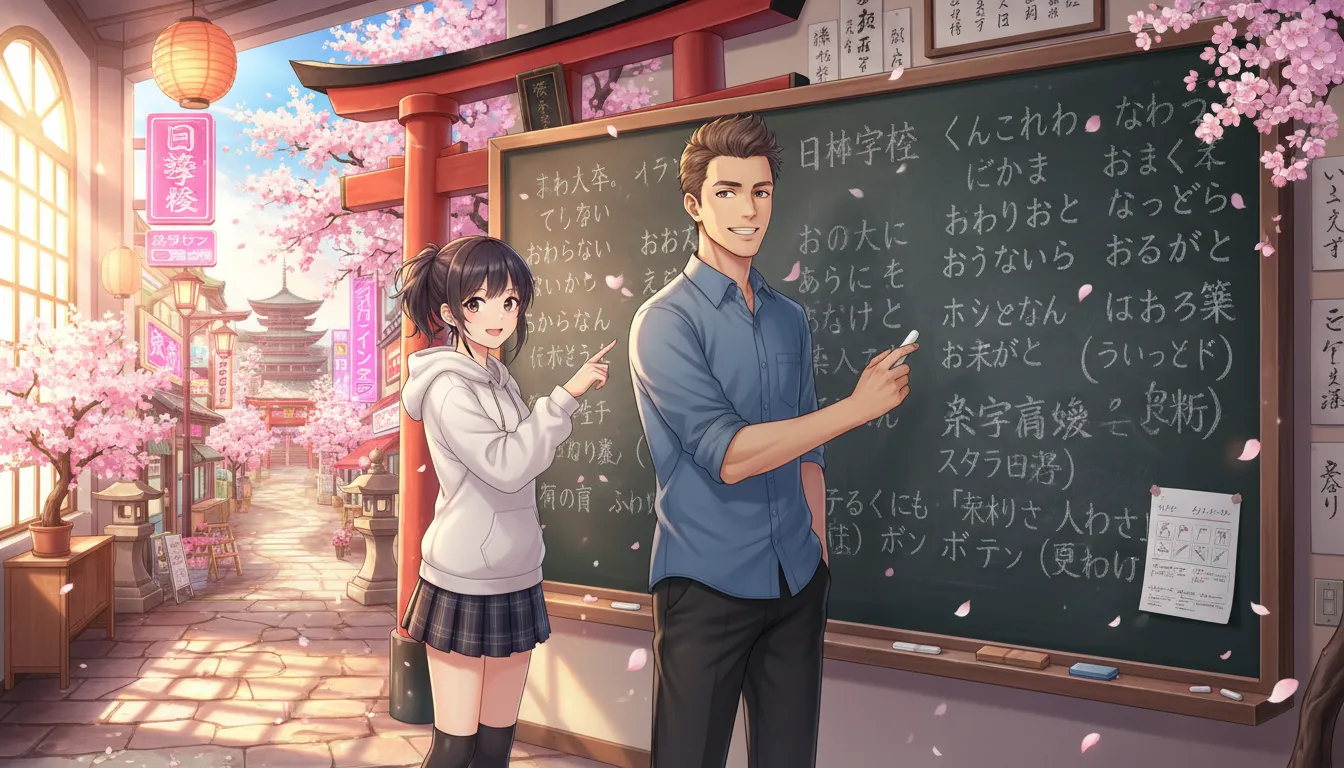
I still remember the exact moment I decided to learn Japanese. I was watching an anime late at night (yes, really), and I got frustrated having to constantly glance at the subtitles. I thought to myself: "How hard could it really be?"
Spoiler alert: harder than I expected, but also more rewarding than I imagined.
Fast forward a few years, and I've built Victor AI - a language learning app that focuses on the exact challenges I faced when I started. But back then, I was just another confused beginner staring at three different writing systems wondering what I'd gotten myself into.
This isn't going to be one of those "Learn Japanese in 30 Days!" posts. This is the honest truth about what it's actually like to start learning Japanese from zero, the mistakes I made, and what I'd do differently if I could start over.
Why I Chose Japanese (And Why You Might Too)
For me, it started with anime and manga. I'm not embarrassed to admit it - Japanese pop culture is what got me hooked. But as I started learning, I discovered so many other reasons to continue:
Business opportunities. Japan is the third-largest economy in the world. Being able to communicate in Japanese opens doors in tech, manufacturing, and countless other industries.
The travel experience. Going to Japan and actually understanding what's happening around you is a completely different experience than being a tourist who can't read signs or order food confidently.
The mental challenge. Learning Japanese fundamentally changes how you think about language. The grammar is different. The writing is different. Even the cultural concepts embedded in the language are different.
The massive fan base. Whether you're into anime, video games, traditional culture, or modern tech - Japan produces incredible content. Accessing it in the original language hits different.
Whatever your reason for wanting to learn Japanese, know this: you're about to embark on one of the most challenging and rewarding language learning journeys possible.
The Three Writing Systems - Welcome to Chaos
This is usually where beginners panic. Japanese has THREE writing systems:
- Hiragana (ひらがな) - 46 basic characters, used for native Japanese words
- Katakana (カタカナ) - 46 basic characters, used for foreign words
- Kanji (漢字) - Thousands of Chinese characters, each with multiple readings
When I first saw this, I genuinely thought: "Why would anyone design a language like this?" But here's the thing - there's actually a logic to it, and you don't need to learn them all at once.
My approach: Hiragana first, everything else later.
I spent my first two weeks ONLY learning hiragana. Not katakana. Not kanji. Just those 46 characters plus the variations. I used flashcards, wrote them out on paper, and practiced every day until I could read any hiragana without thinking.
This was the single best decision I made as a beginner. Hiragana is the foundation. Kids' books use hiragana. Grammar resources use hiragana. Once you know it, you can actually start reading simple Japanese.
After hiragana felt solid (about 10-14 days), I spent another week on katakana. Same drill - flashcards, writing practice, repetition. Katakana is structurally similar to hiragana, so it goes faster.
Then came kanji, which... is a journey that never really ends. More on that later.
The key lesson: Don't try to learn all three systems simultaneously. You'll just confuse yourself. Hiragana → Katakana → Kanji. In that order.
Pronunciation Is Easier Than You Think
Here's some good news: Japanese pronunciation is actually pretty straightforward, especially compared to languages like French or Mandarin.
Japanese has only 5 vowel sounds:
- あ (a) like "ah"
- い (i) like "ee"
- う (u) like "oo"
- え (e) like "eh"
- お (o) like "oh"
These vowels are always pronounced the same way. Unlike English where "a" can sound completely different in "cat," "cake," and "about," Japanese vowels are consistent. Say さ (sa) and it's always "sah." No surprises.
The consonant sounds are also mostly familiar to English speakers. There are a few tricky ones (like the Japanese "r" which is sort of between an English "r" and "l"), but nothing that requires years of practice.
I was reading words out loud within my first week. It felt amazing.
But here's the hidden trap: pitch accent.
Japanese is a pitch-accent language, meaning the pitch pattern of a word can change its meaning. For example, はし can mean "bridge," "chopsticks," or "edge" depending on which syllable is stressed.
As a beginner, I completely ignored pitch accent. I could pronounce words, but natives would sometimes look confused when I spoke. It wasn't until months later that I realized I was saying words with the wrong pitch pattern.
My advice: be aware that pitch accent exists, but don't stress about mastering it as a beginner. Focus on getting the basic sounds right first. You can refine your pitch later through exposure and practice.
Grammar Feels Backwards (Until It Doesn't)
English: "I eat sushi." Japanese: "私は寿司を食べます。" (Watashi wa sushi wo tabemasu.) Literally: "I sushi eat."
Japanese grammar is SOV (Subject-Object-Verb), which means the verb always comes at the end. Coming from English, this felt completely backwards at first.
But here's what I discovered: once you get used to it, Japanese grammar is actually MORE consistent than English.
Particles are your friends. In Japanese, small words called particles (は, が, を, に, で, etc.) tell you exactly what role each word plays in the sentence. は marks the topic. を marks the object. に marks direction or location. Once you learn the particles, sentences become like puzzles you can decode.
My first month, I felt like I was constantly translating in my head: "Okay, watashi is 'I,' wa marks the topic, sushi is sushi, wo marks the object..." But after a while, my brain started processing Japanese structures directly without translating.
The key: don't fight the grammar, embrace it. Japanese grammar isn't broken English - it's a different system with its own internal logic.
Some patterns that helped me:
- Verbs don't conjugate for person or number (no "I eat" vs "he eats" distinction)
- Question sentences just add か (ka) at the end - no word order change needed
- Tense is marked once per sentence - you don't need to conjugate every verb
The more I studied Japanese, the more I appreciated how elegant the grammar actually is once you stop expecting it to work like English.
The Politeness Levels - A Cultural Deep Dive
This was something I underestimated as a beginner: Japanese has built-in politeness levels.
There's casual form (like talking to close friends), polite form (です/ます form, used in most everyday situations), and keigo (honorific language used in formal business settings or when showing deep respect).
When I started learning, I made the mistake of trying to learn ALL the forms at once. This was overwhelming and unnecessary.
What I should have done: Focus ONLY on polite form (です/ます) for the first few months.
Polite form is the safe default. You can use it with strangers, colleagues, shopkeepers, basically everyone except close friends and small children. It won't sound overly formal, and it won't risk offending anyone.
Casual form is actually HARDER because you need to understand the social context to know when it's appropriate. Using casual form with the wrong person is worse than using polite form when casual would have been fine.
Keigo (honorific language) is its own beast. Unless you're planning to work in a Japanese office or formal setting, you can save it for intermediate/advanced study.
My recommendation for beginners: Master polite form first. It's what you'll use 80% of the time anyway.
Kanji - The Mountain That Never Ends
Let me be brutally honest: kanji is hard. Like, really hard.
To be literate in Japanese, you need to know about 2,000-3,000 kanji characters. Each character can have multiple readings (on'yomi and kun'yomi), multiple meanings, and can combine with other kanji to create compound words.
When I started, I thought I'd just memorize them like vocabulary words. 大 means "big," 小 means "small," easy!
Then I learned that 大 can be read as "dai," "tai," or "oo" depending on context. And it shows up in compounds like 大学 (university), 大切 (important), 大丈夫 (okay/safe) where you need to know both kanji to understand the meaning.
I hit a wall around 300 kanji. I was forgetting them as fast as I was learning them.
What saved me: learning kanji through radicals.
Radicals are the building blocks of kanji. Once I started breaking down complex kanji into their component radicals, everything clicked. For example:
- 休 (rest) = 人 (person) + 木 (tree) - a person resting against a tree
- 明 (bright) = 日 (sun) + 月 (moon) - sun and moon make brightness
- 森 (forest) = 木 (tree) + 木 + 木 - three trees make a forest
Not all kanji have neat stories like this, but understanding radicals made them feel less like random scribbles and more like logical combinations.
The other thing I learned: reading ≠ writing.
In the real world, you need to RECOGNIZE kanji (read signs, menus, texts) way more than you need to WRITE them by hand. Japanese people type on keyboards too - they don't handwrite everything.
So I stopped stressing about perfect stroke order and focused on recognition. I can read probably 1,500 kanji now, but could only write maybe 300 from memory. And that's fine for my needs.
Speaking vs Reading - The Gap I Didn't See Coming
By month three, I could read basic Japanese. I understood hiragana, katakana, and a few hundred kanji. I could work through textbook exercises and understand simple sentences.
Then I went to Japan for a trip.
I could read restaurant menus. I could understand signs in the subway. I could follow written instructions. But when someone actually SPOKE to me? I froze.
The problem: I'd been learning passively, not actively.
Reading and listening are INPUT skills. Speaking is an OUTPUT skill. They're related, but they're not the same.
I could understand "これはペンです" (kore wa pen desu - this is a pen) written down. But when I tried to construct my own sentences in real time during a conversation? My brain couldn't keep up.
This is the trap so many beginners fall into. We study grammar rules, memorize vocabulary, and do textbook exercises. But we don't actually PRACTICE SPEAKING until we feel "ready."
Newsflash: you'll never feel ready.
How Daily Speaking Practice Changed Everything
After that trip to Japan, I completely changed my approach. I started prioritizing speaking practice every single day.
The problem was finding speaking partners. Language exchange apps were hit-or-miss. Tutors were expensive. And I felt self-conscious making mistakes in front of real people.
This frustration is actually what led me to build Victor AI. I wanted an AI conversation partner that wouldn't judge me, would correct my mistakes, and would be available 24/7 whenever I wanted to practice.
But whether you use Victor AI or find human conversation partners or use other apps - the point is the same: you need to speak from day one.
Don't wait until you "know enough grammar." Don't wait until you "have enough vocabulary." Start speaking with what you have, make mistakes, get corrected, and improve.
My speaking improved more in one month of daily conversation practice than in three months of textbook study.
Anime and Japanese Media - What Helps, What Doesn't
Since anime is what got me interested in Japanese, I thought watching more anime would help me learn faster.
It did help... but not in the ways I expected.
What anime is good for:
- Listening practice (hearing natural Japanese spoken at natural speed)
- Picking up casual conversational phrases
- Cultural context (understanding Japanese humor, social dynamics, references)
Where anime falls short:
- Anime Japanese ≠ real Japanese. Characters often use exaggerated speech patterns, made-up words, or extremely casual/rude language you shouldn't use in real life.
- Lots of fantasy/action vocabulary that isn't useful for everyday conversation
- You can't pause and ask questions like you can with a tutor or AI
I still watch anime, but I stopped treating it as my primary learning resource.
Better sources for learning real Japanese:
- Japanese slice-of-life dramas (shows about everyday life)
- YouTube channels by Japanese people talking about normal topics
- Podcasts for learners (slower speech, clear pronunciation)
- News articles written in simple Japanese
The key is consuming content where people speak naturally about everyday topics - shopping, cooking, work, relationships. That's the Japanese you'll actually use.
My Biggest Mistakes and What I'd Do Differently
Looking back on my Japanese learning journey, here are the mistakes I made and what I'd change:
Mistake #1: Trying to learn all three writing systems at once. Fix: Focus on hiragana first, then katakana, then kanji. One at a time.
Mistake #2: Waiting too long to start speaking. Fix: Start having conversations (even bad ones) from week one. Use Victor AI, language exchange apps, or tutors - just SPEAK.
Mistake #3: Studying kanji through rote memorization instead of radicals. Fix: Learn the common radicals first, then build kanji knowledge systematically.
Mistake #4: Ignoring pitch accent completely. Fix: At least be AWARE it exists. Listen to native speakers and try to mimic their pitch patterns.
Mistake #5: Studying only polite form OR only casual form. Fix: Master polite form first (it's the safe default), add casual form later once you understand social context.
Mistake #6: Treating anime as a primary learning resource. Fix: Watch anime for fun, but learn from resources designed for learners or natural everyday content.
Mistake #7: Setting unrealistic expectations. Fix: Japanese is a Category IV language for English speakers (hardest category). It WILL take time. Be patient with yourself.
Your First 30 Days Plan
If I could start over as a complete beginner, here's exactly what I'd do in my first month:
Week 1: Hiragana Only
- Learn all 46 basic hiragana characters
- Practice reading them in different combinations
- Write them out by hand for muscle memory
- Goal: Read hiragana fluently without thinking
Week 2: Katakana + Basic Phrases
- Learn all 46 basic katakana characters
- Start learning survival phrases (hello, thank you, excuse me, etc.)
- Begin simple polite form verbs (です/ます)
- Goal: Read katakana fluently, use 10-20 basic phrases
Week 3: Basic Grammar + First Kanji
- Learn particles (は, が, を, に, で)
- Learn basic sentence structure (SOV)
- Start your first 50 kanji (most common ones)
- Have your first conversation practice using Victor AI or a language partner
- Goal: Build simple sentences, recognize common kanji
Week 4: Daily Practice Routine
- 15 minutes kanji review (using spaced repetition)
- 15 minutes grammar study
- 20 minutes conversation practice
- 10 minutes listening practice (podcasts, videos)
- Goal: Establish a sustainable daily habit
The key to the first 30 days isn't to learn everything - it's to build a solid foundation and establish good habits.
Frequently Asked Questions
How long does it take to learn Japanese?
The honest answer: it depends on what "learn" means to you. To hold basic conversations and read simple texts? Maybe 6-12 months of consistent study. To be fluent and literate? 2-3 years minimum, more realistically 4-5 years. To master it completely? Lifelong journey. Check out my detailed breakdown in how long to learn Japanese.
Should I learn romaji (Japanese written in English letters)?
No. Avoid romaji as much as possible. It's a crutch that will slow you down. Learn hiragana in your first week and start reading actual Japanese characters immediately. Your brain needs to process Japanese as Japanese, not as English approximations.
Do I need to learn to write kanji by hand?
Not unless you specifically want to. Focus on RECOGNITION (reading kanji) over PRODUCTION (writing kanji by hand). In the modern world, you'll type way more than you handwrite. That said, writing kanji can help you remember them, so some handwriting practice isn't a bad idea.
Is Japanese harder than Chinese/Korean/other languages?
For English speakers, Japanese is rated Category IV (hardest) by the US Foreign Service Institute, same as Arabic, Chinese, and Korean. It IS objectively difficult. But "harder" is subjective - some people find the grammar harder, others struggle more with the writing system. Every language has its challenges.
What's the best app for learning Japanese?
I'm biased, but I built Victor AI specifically to solve the problems I faced learning Japanese - getting daily speaking practice without judgment, having corrections explained clearly, and practicing real conversations. That said, use whatever keeps you motivated and practicing consistently. Check out my comparison in best apps to learn Japanese.
Final Thoughts
Learning Japanese as a beginner is humbling, frustrating, exciting, and deeply rewarding - often all in the same day.
There were days when I felt like I was making incredible progress. And there were days when I couldn't remember basic vocabulary I'd studied a hundred times.
The difference between people who successfully learn Japanese and those who quit isn't talent - it's consistency. Showing up every day, even when you don't feel like it. Making mistakes and not giving up. Celebrating small wins like reading your first kanji sign or having your first successful conversation.
If you're just starting out, know this: the beginning is the hardest part. The writing systems feel overwhelming. The grammar feels backwards. You'll forget vocabulary constantly.
But if you stick with it - if you put in the daily work and actually practice speaking instead of just studying - you WILL make progress. One day you'll realize you understood a sentence without translating it. Or you'll read a sign in Japanese without thinking about it. Or you'll have a conversation and the words will just flow.
Those moments make all the struggle worth it.
Ready to start? The best time to begin was yesterday. The second best time is today.
And if you need a conversation partner who's available 24/7 and won't judge your mistakes, Victor AI is here to help.
頑張ってください!(Good luck!)
Looking for more Japanese learning resources? Check out my guides on how to learn Japanese and best apps to learn Japanese.
Ready to Start Your Language Journey?
Join 100,000+ learners using Victor AI to become conversational.
Download Victor AI Free